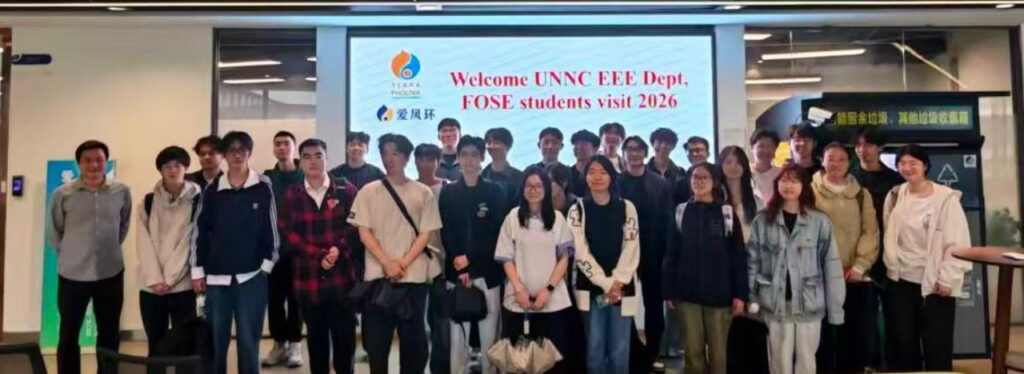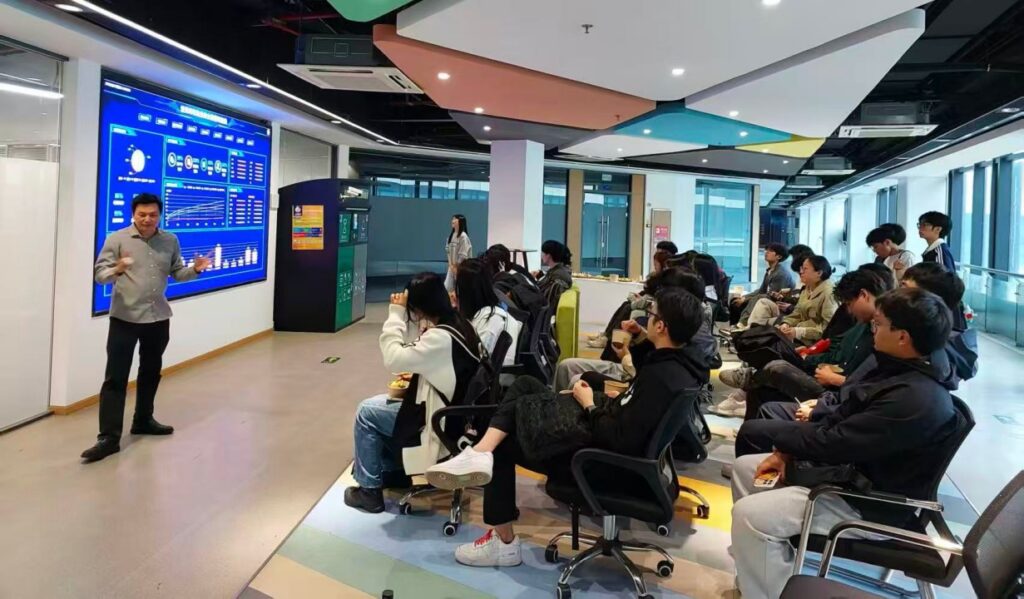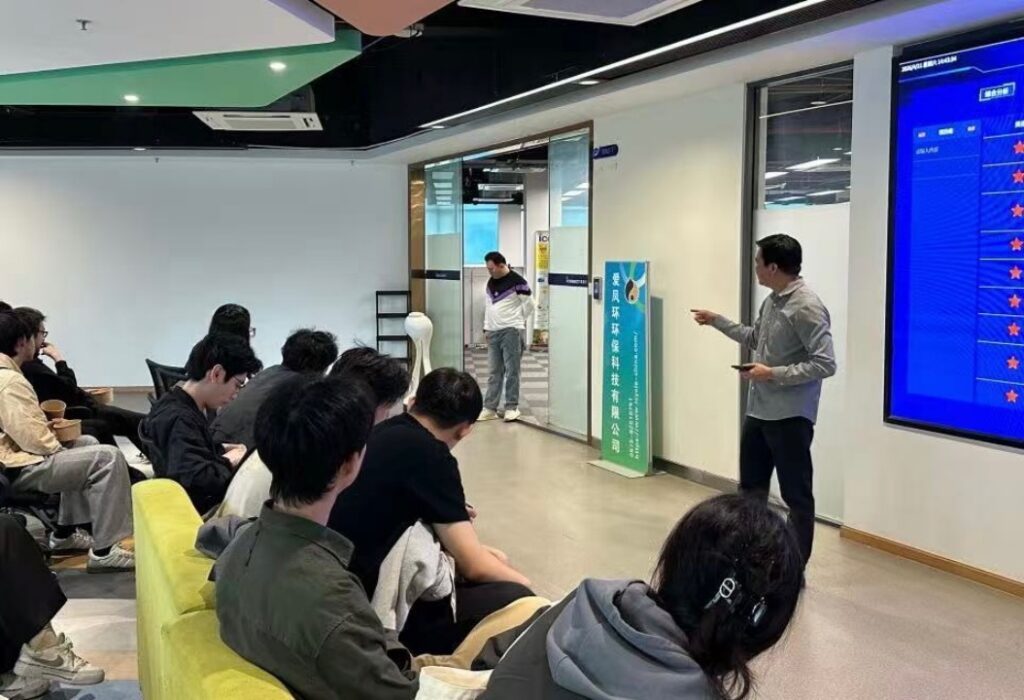
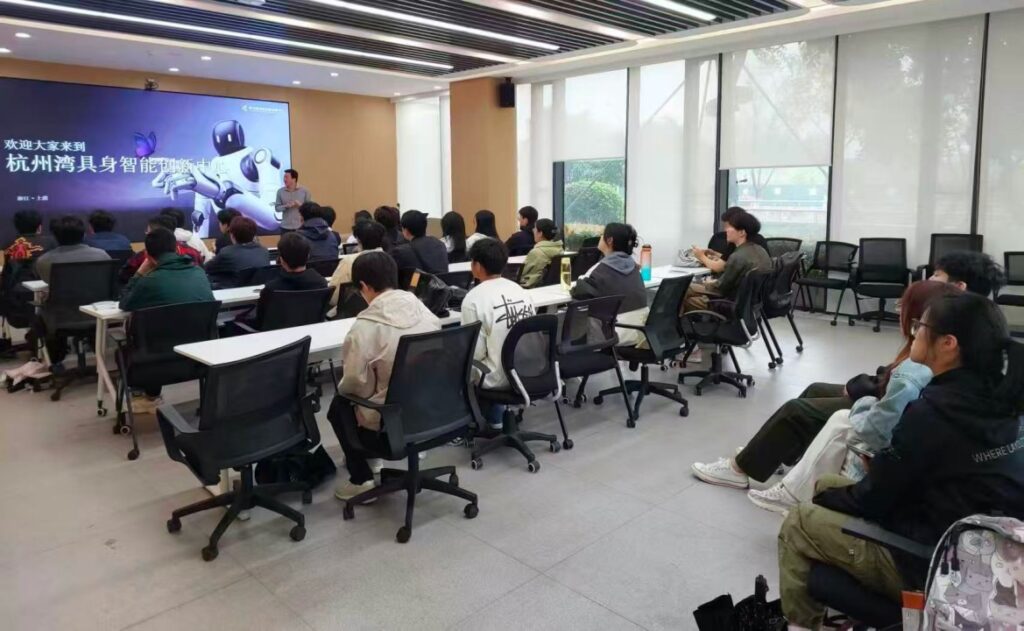
On 11 April, Dr Tan Ching Seong, Chairman of Terra Phoenix Group of Companies and Professor at the University of Nottingham Ningbo China (UNNC), led his students on a visit to the Hangzhou Bay Intelligence Innovation Center for a specialized training session on “Robot and AI Data Collection”. Afterwards, the students toured the headquarter of Terra Phoenix Group of Companies to experience first-hand the company’s latest achievements in smart environmental protection. The event served as both an in-depth technical learning journey and a vivid demonstration of industry-academy integration.
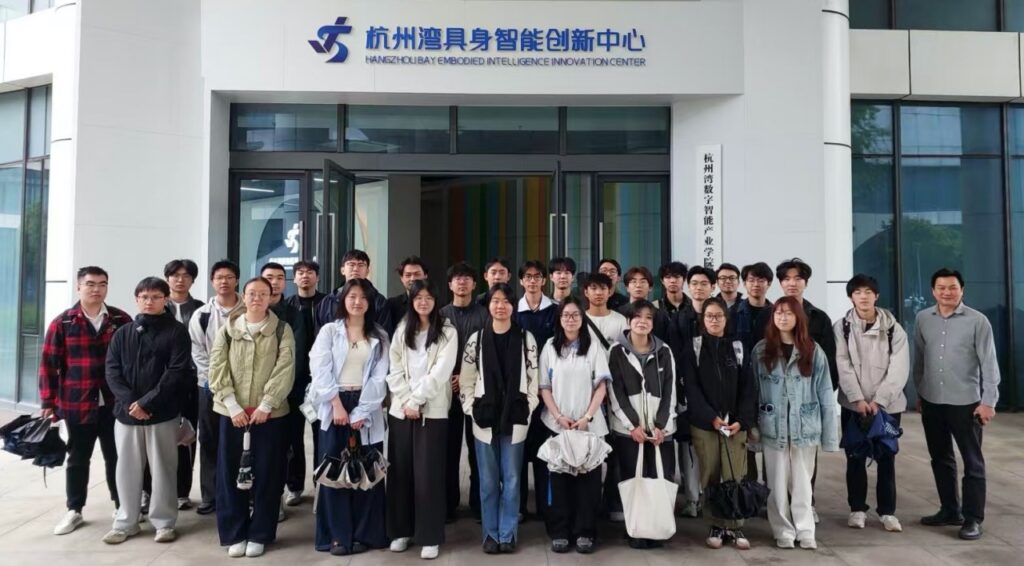
Part I: Hangzhou Bay Embodied Intelligence Innovation Center – Unlocking the Path to Robotic Intelligence
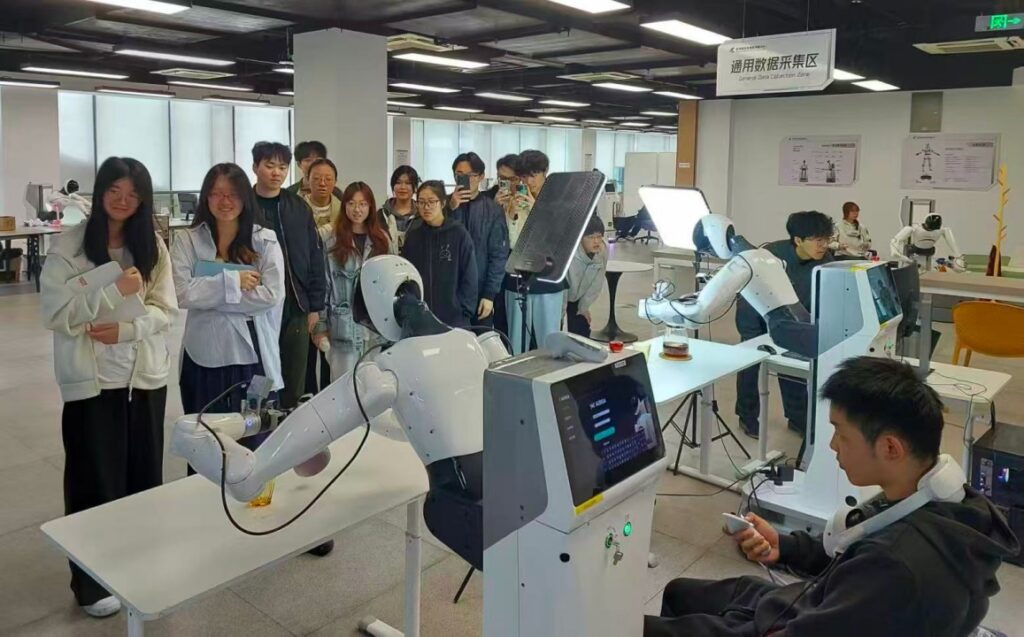
At the Innovation Centre, students experienced the journey of a robot evolving from “zero foundation” to “intelligent application”. During the VR hands-on session, students were divided into groups and used VR devices to remotely control robots performing tasks such as preparing coffee, picking up objects and placing them down. Each manual demonstration served as “data enhancement” for the robot’s autonomous learning, helping participants intuitively grasp the fundamental logic of “humans-machines interaction”.
During the platform training session, technical staff demonstrated the Genie platform, explaining how raw data is reviewed, annotated, filtered, and emphasized the importance of “data quality” in model training. Subsequently, Professor Dr Tan explained the logic behind the Genie Studio platform, guiding students through the complete technical chain – from motion editing and model debugging to task deployment. During the mechanics exploration session, the technical staff used a display panel filled with disassembled robot components and explain the operational principles of mechanical structures, helping students to build a solid technical understanding of robot mechanical hardware.
The tech showcase session also featured the Zhiyuan robot dog and the Lingxi X2 humanoid robot. Other AI products such as stringless guitar, the UBTECH educational robot and a chess-playing robot were also available for hands-on experience, allowing students to interactively discover the limitless possibilities of integrating intelligent technology into daily life.
Part II: Terra Phoenix Group – Focusing on Smart Environmental Protection, Showcasing Innovative Achievements
Professor Dr. Tan led the students back to the headquarter of Terra Phoenix Group of Companies, where they toured the company’s core products and technology platforms. The following key offerings were highlighted. The smart waste chamber is equipped with a high-precision AI visual recognition system and an automatic weighing module. The AI visual recognition system could identify the waste types accurately and guides users to dispose the waste in the corresponding waste bin. The device supports multi-scenario deployment and smart point based feedback. After each disposal, it automatically weighs and uploads data to the backend, enabling real time data recording and traceability, effectively improving front end sorting efficiency and user engagement – creating a close-loop recycling terminal.
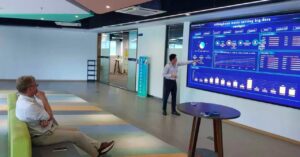
The Terra Phoenix’s Waste Segregation Big Data Dashboard is a visualisation management platform developed in-house that aggregates diverse data from device operations, user behaviour and sorting performance, presenting them through various dynamic charts and other visual formats. It supports regional profiling, operational diagnostics and decision making assistance, truly enabling a new paradigm of smart environmental management system. The Robot Supervisor, designed for communities and public spaces, is an intelligent assistant equipped with a high definition camera and voice interaction system. It monitors disposal behaviour in real time, automatically identifies incorrect or mixed waste disposal, and provides instant voice reminders. All data is synchronously uploaded to the backend, forming traceable behavioural records, making waste sorting management more efficient and intelligent.
The optical communication system is a hybrid solution that combines lighting with Li Fi light communication technology. It supports high speed data transmission alongside 5G, featuring low energy consumption, immunity to electromagnetic interference, high bandwidth and broad coverage. As a Li Fi solution, it has been successfully deployed in museums, exhibition centres and other scenarios. During the visit, students not only witnessed the real world application of AI and robotics in environmental protection scenarios but also gained a deeper understanding of the complete industrial chain – from technology research and development to product realisation.