Green Office
Introduction
Green Office
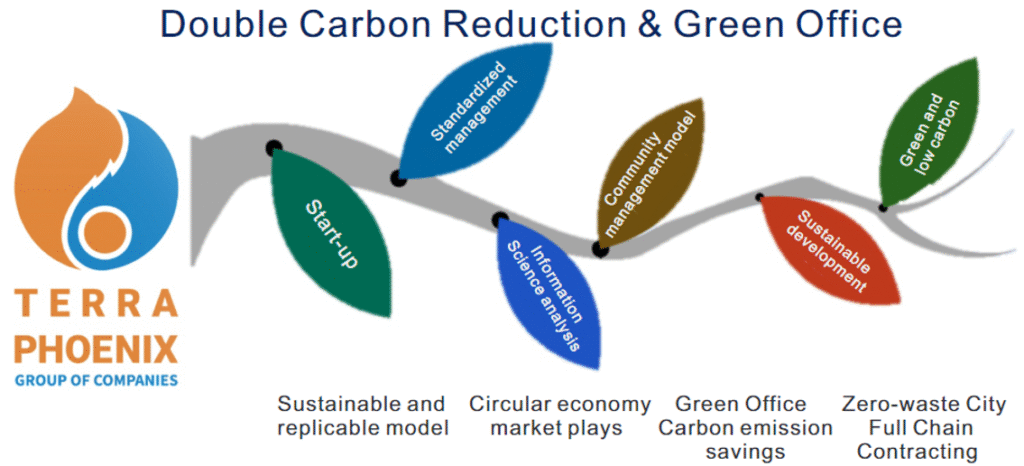
Green Office is the flagship product of iFengHuan. Drawing on the proven experience of Singapore’s Green Office initiative, it extends the framework into corporate ESG and social responsibility systems. Integrating modules including waste sorting, energy management, water management, ESG administration and indoor environmental management, it cuts carbon emissions to reduce carbon tax liabilities. It delivers clear standardised guidance for big-data IoT and intelligent carbon reduction in office building construction and property operation.
Core Product
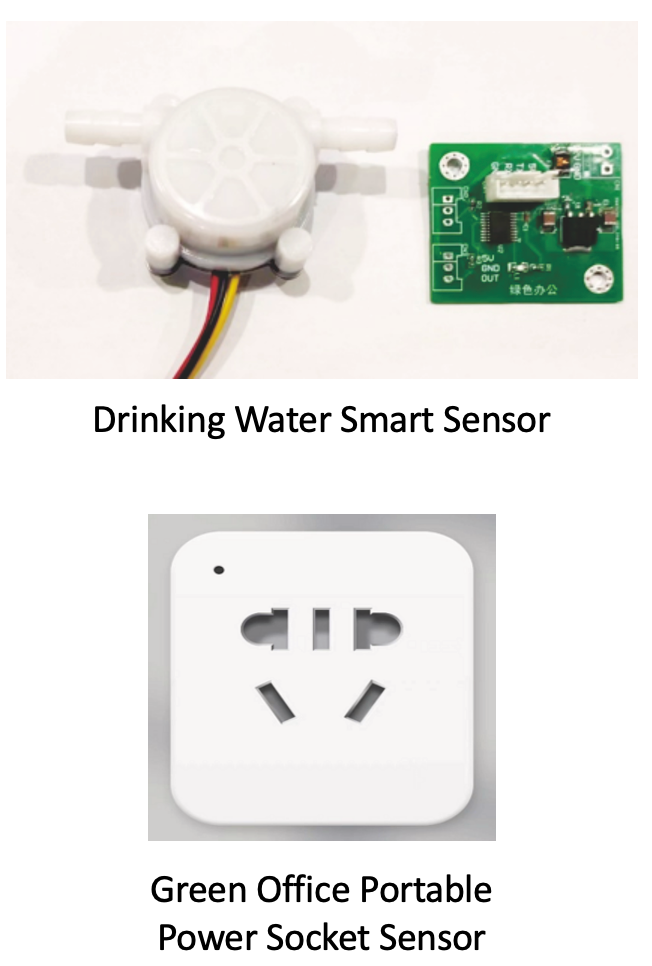
Industry Innovation:
1.Achieve cost‑control for clients by optimizing basic energy and water conservation management.
Core Technologies of Green Office:
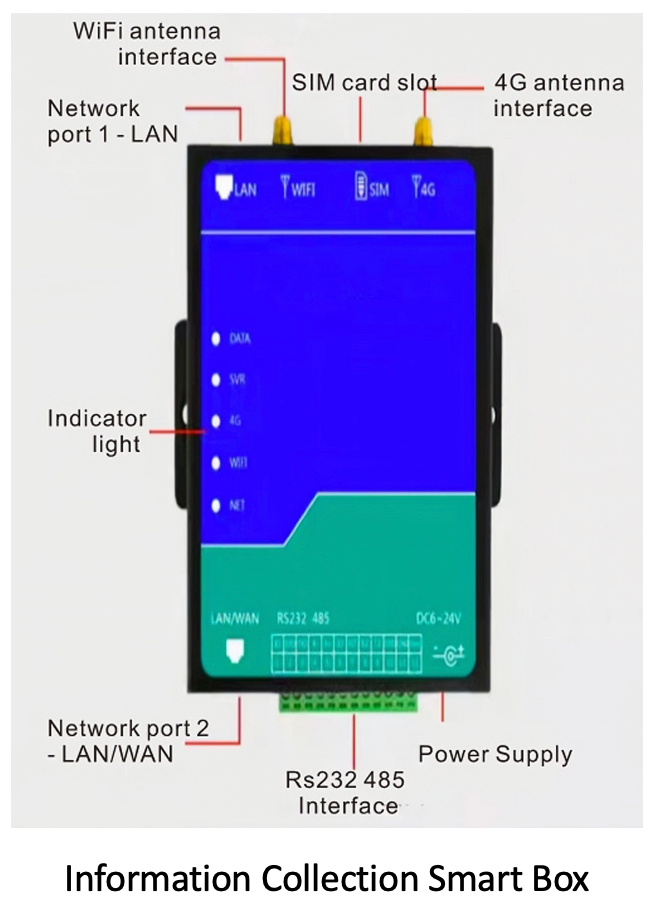
- Automated IoT‑enabled data collection and analytics platform for green office, supporting IoT connectivity and open to multi‑party technical integration.
- New algorithms for carbon measurement and carbon‑footprint calculation.
- Multi‑mode, multi‑module dual‑carbon platform tailored for green office scenarios.
- IoT plus intelligent system to auto‑generate ESG reports, as well as set emission‑reduction plans and monitor implementation progress.
- Human‑centered mechanism: combining staff‑behavior patterns with green‑office management frameworks to establish reward‑and‑penalty rules for higher engagement; analyzing corporate waste‑related data to support ESG compliance.
- Upcoming new algorithm for green business travel, supporting the setup of individual‑ and department‑level carbon credit quotas.
Aifenghuan Green Office Management Model
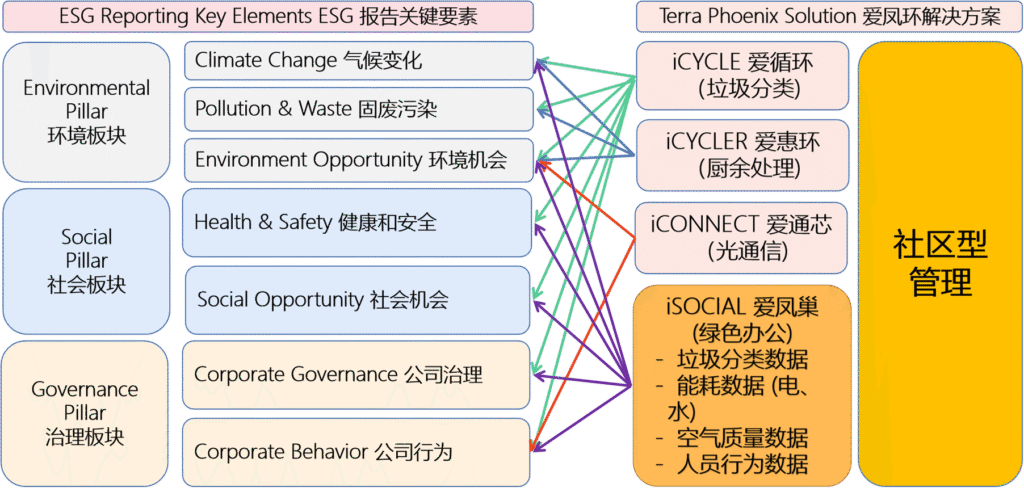
Extended Concepts of Green Office Practices
Metered Billing
In July 2021, the National Development and Reform Commission and the Ministry of Housing and Urban-Rural Development issued the “Guiding Opinions on Promoting Metered Charging for the Treatment of Food Waste from Non-Residential Sources.” The system includes monitoring, metering, billing and payment, management, big data services, and other functions.
Recyclable Resources: Further Standardization of Collection Channels Is Expected to Improve Both Recovery Rates and Quality
Since 2019, regulations on household waste management and waste-sorting implementation plans have been introduced across China. With residents required to sort waste at the point of disposal, together with standardized collection and transfer processes, downstream recycling and resource recovery are expected to become increasingly standardized. Upstream and downstream channels for food waste collection and recycling are also expected to become further standardized.
Aifenghuan “Internet+” Model: A New Approach to Waste Sorting — iCYCLE
2017, the National Development and Reform Commission and the Ministry of Housing and Urban-Rural Development issued the Implementation Plan for the Household Waste Sorting System, encouraging innovative mechanisms such as the “Internet+” model. The model supports residents with waste sorting at the source, enables effective monitoring during the collection and transfer stages, and promotes resource recovery and utilization at the end stage.
New Trend in Green Offices — Innovative Corporate Social Responsibility Mechanisms
2022, building on the Green Office concept and extending it to corporate social responsibility mechanisms, with carbon reduction measures aimed at reducing potential carbon tax liabilities. Waste Sorting, Energy Management, Water Management, Indoor Environmental Management, and ESG Management.